

Master's Degree in Sustainability Studies
- 3 semester
- Hybrid
- Credits 36
- Full-time
- Start date: January 11, 2027
- SNIES code: 107959
What will you learn in the Master's Degree in Sustainability Studies?
The master’s degree offers interdisciplinary training focused on analyzing the environmental crisis, environmental planning, territorial and community governance, working with communities, and using geographic information tools to understand and address socio-environmental issues.
The program stands out for its use of social science methodologies, such as geography and anthropology, to analyze territorial contexts and propose solutions that recognize the diversity of cultures, ecosystems, and forms of knowledge. In addition, it offers different options for completing the degree, including both basic and applied research: research articles, policy documents, consulting, and social innovation.
Format and Schedule
Hybrid format
*Hybrid: you can attend class in person at the university or connect from home, as classes are streamed live.
You can pursue your master’s degree without giving up everything that matters to you. We offer flexible schedules and a hybrid format that combines synchronous virtual meetings and in-person sessions, allowing you to advance your education with the balance you need.
Weekly meetings, with five in-person sessions per semester and the rest held in hybrid format
The final schedule and class days depend on the courses enrolled in.
We know that personal life is just as important as academic life, which is why you can choose as many credits as you consider appropriate, according to your available time and budget.

S1...S16: Weeks | H: Hybrid* | P: In-person
Thursday and/or Friday during the 6:30 to 10:00 a.m. and 5:00 to 9:00 p.m. time slots
Saturdays between 7:00 a.m. and 1:00 p.m.
Hybrid sessions
Thursday and/or Friday during the 6:30 to 9:20 a.m. and 5:00 to 8:00 p.m. time slots
Saturdays between 7:00 a.m. and 1:00 p.m.
In-person sessions
Degree options
Students in this master’s program may choose one of the following degree options: writing an academic article, a public policy document, or a consulting or social innovation project.
- Academic article: a synthesis of academic research findings presented in an article format suitable for publication in a journal.
- Public policy document: Cider aims to contribute to public debate on how to address a socially relevant problem through policy action.
- Social innovation project: co-created with communities in order to learn with them, transform their lives, and reduce their vulnerability.
- Consulting: diagnoses and alternative solutions to problems proposed by public organizations, civil society organizations, and companies.
Graduate profile
Graduates of the Master’s Degree in Sustainability Studies will be able to analyze and investigate the environmental crisis in its various dimensions and scales, using conceptual and methodological frameworks from the social sciences in dialogue with other disciplines.
They will also be able to propose projects, policies, and governance, land-use planning, socioecological transition, and risk management instruments, taking into account the complexity and diversity of territorial contexts. Their training will enable them to guide the development of knowledge and action proposals by integrating critical thinking, the rigorous use of evidence, effective communication, teamwork, social participation, information systems, and professional ethics.
Likewise, they will be able to contribute to the transformation of socio-environmental conflicts in order to advance toward more just and sustainable societies.
Graduates will be able to work as specialists, consultants, or advisors in state agencies, territorial entities, national and international non-governmental organizations, international cooperation agencies, universities, research centers, and consulting firms.
Competencies
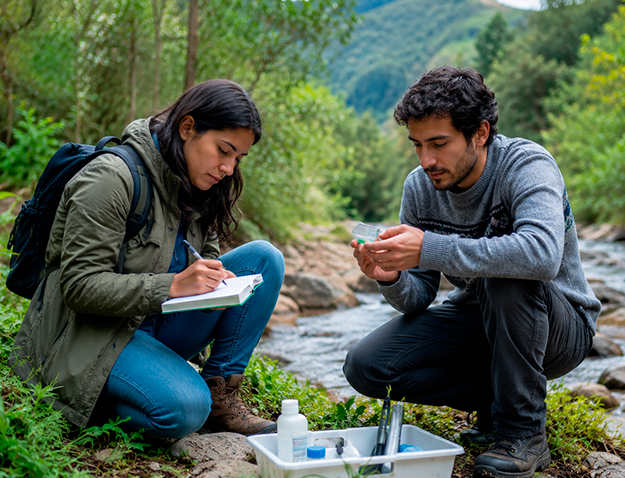
Students will develop the ability to analyze the causes and manifestations of the environmental crisis at different territorial scales, integrating approaches from the social sciences and other disciplines. They will also be able to participate in interdisciplinary research on sustainability, contribute to the construction of situated knowledge, and communicate arguments based on rigorous evidence.
The program also seeks to strengthen the ability to recognize socio-environmental conflicts in diverse, multicultural contexts marked by inequalities, as well as to propose projects, policies, and governance, territorial planning, socio-ecological transition, and risk management instruments with social participation, geospatial tools, and the integration of diverse forms of knowledge.
Learning Outcomes
Upon completing the master’s degree, students will be able to formulate positions that reflect the complexity of the environmental crisis; explain its causes and dimensions from different disciplinary perspectives; apply geospatial tools to analyze socio-environmental problems; recognize diverse ontologies and epistemologies concerning the environmental crisis; and integrate the knowledge and experiences of different stakeholders.
They will also be able to work in interdisciplinary or transdisciplinary teams, formulate research questions, recommend public policies, guide actions with organizations and communities, interpret regulatory frameworks for environmental governance, and communicate proposals that mobilize social actors toward sustainable transitions.
FAQs about the Master's Degree in Sustainability Studies
The master’s program examines the environmental crisis from an interdisciplinary perspective, with an emphasis on social sciences, territorial analysis, environmental governance, socio-environmental conflicts, and work with communities.
The program is offered in a hybrid format. This combines flexibility with in-person sessions, hybrid classes, and educational experiences such as field trips and applied work sessions.
The program includes alternatives such as a research article, public policy paper, consulting, and social innovation.
Its focus is not on environmental engineering, corporate sustainability, management, or entrepreneurship. Its distinctive feature lies in the socio-environmental, territorial, community-based, and interdisciplinary analysis of sustainability.
They may work in public entities, non-governmental organizations, international cooperation agencies, universities, research centers, territorial entities, and consulting firms.
Dual program, credit transfer, and academic mobility
Dual programs
Depending on the case, you may pursue two master’s degrees with between 45 and 48 credits in total, instead of 74 credits separately. This represents approximately 40% fewer credits, a lower investment, and a lighter academic workload to earn two master’s degrees.
Some related programs are the Master’s Degree in Peacebuilding, Gender, Interdisciplinary Development Studies, International Law, and Education.
Credit transfer
Specialization and master’s degree students can transfer part of the credits earned in one of the Cider programs or in another program outside the University, provided that they meet the requirements of the University’s Credit Transfer and Validation Regulations.
The credit transfer request must be formally submitted here. for review and approval by Cider’s Academic Coordination.
Microcredentials and transferable courses
Those who do not enter the program directly may take microcredentials or transferable courses offered by Continuing Education at Universidad de los Andes. After passing them, they may request the transfer of credits through Cider’s Academic Coordination. For more information, consult the current course portfolio here.
*Does not apply to all courses offered by Continuing Education, only certain specific ones.
*Does not apply to regular students of Universidad de los Andes.

Academic mobility:
Students interested in national or international academic mobility processes can do so through the Internationalization Office of Universidad de los Andes, using the following links: https://internacionalizacion.uniandes.edu.co/estudiante-maestria-uniandes-intercambio-internacional and https://uniandes.adv-pub.moveonca.com/home-page-2702/
Study in the Netherlands:
Complement and strengthen your education by taking up to two elective courses in the Master’s in Development Studies at the International Institute of Social Studies (ISS), which is part of Erasmus University Rotterdam in The Hague (Netherlands).
More information here: The International Institute of Social Studies opens its doors to Cider master’s students
Completa nuestro formulario de contacto
Application and admissions process
Application, admissions, and enrollment schedule
Applications open: July 27
Cierre 1
Cierre 2
Cierre 3
Tuition and financial aid
Academic credit fee 2026**:
$1.890.000 COP
$500 USD*
*Approximate investment in dollars; it may vary according to the day’s TRM.
**The semester investment amount depends on the number of credits the student enrolls in.
**The 2027 investment amount will be determined at the end of 2026, based on the variation in the CPI.
Admission confirmation and enrollment payment:
* Admission confirmation is an advance payment of $2,000,000, which allows you to secure your place in the program to which the university admitted you.
*This amount will be deducted from the total enrollment fee.
*If the applicant ultimately does not enroll at the university, this money will not be refunded
Did you know that more than 33% of the student community has some type of scholarship?
The University offers you several financing options so that you can begin your studies. Many of our students receive scholarships, loans, or some type of financial assistance.
Cubre hasta el 90% del valor de la matrícula. Puede incluir apoyo económico para vivienda y sostenimiento.
Cubre hasta el 100% del valor de la matrícula.
Descuento dirigido a contratistas y funcionarios públicos. Consulta las condiciones y requisitos para acceder al beneficio.
Descuento dirigido a colaboradores de la Cruz Roja en Colombia. Consulta las condiciones y requisitos para acceder al beneficio.
Financia entre el 50% y hasta el 80% de la matrícula de estudiantes actuales o que estén en proceso de admisión.
Cubre el 5% del valor de la matrícula para egresados formales de Pregrado, Maestría y Especialización.
Préstamo por el 80% del valor de la matrícula. Puedes pagar el capital hasta en 48 meses.
Pagas una parte de tu matrícula mientras estudias y el porcentaje restante después de graduarte.
SUFI-Bancolombia, Fincomercio, Davivienda y JFK (cooperativa financiera).
Professors
Profesor de planta
- Ph.D. en Planificación Urbana y Regional
- c.vergel @uniandes.edu.co
Profesor de planta
- Ph.D. en Estudios del Desarrollo
- govargas @uniandes.edu.co
Profesor de planta
- Ph.D. en Ciencia Política
- jsantand @uniandes.edu.co
Profesora de cátedra
- Ph.D. en Estudios Interdisciplinarios sobre Desarrollo
- j.jaramilloj @uniandes.edu.co
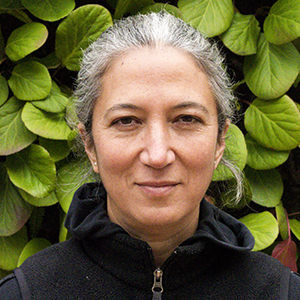
Profesora de planta
- Ph.D. en Recursos Naturales, Ambiente y Sostenibilidad
- mc.roag @uniandes.edu.co
Publications
Do you have any questions?
Remember that we are here to help you at every step of the process. Send us your information, the program you are applying to, and your question at:

Nataly Guanumen Rodríguez
Applicant Experience Advisor
📩 ln.guanumen@uniandes.edu.co
📞(601)3324060 Extension 2669
🏦Office G-401
You can also write to us via WhatsApp